By: Ellen Finnie, In the Open

Free the ScienceThe Electrochemical Society, a small nonprofit scholarly society founded in 1902, has an important message for all of us who are concerned about access to science. Mary Yess, deputy executive director and chief content officer and publisher, could not be clearer about the increased urgency of ECS’ path: “We have got to move towards an open science environment. It has never been more important – especially in light of the recently announced ‘gag orders’ on several U.S. government agencies– to actively promote the principles of open science.” What they committed to in 2013 as an important open access initiative has become, against the current political backdrop, truly a quest to “free the science.”

ECS’s Free the Science program is designed to accelerate the ability of the research ECS publishes — for example, in sustainable clean energy, clean water, climate science, food safety, and medical care — to generate solutions to our planet’s biggest problems. It is a simple and yet powerful proposition, as ECS frames it:

“We believe that if this research were openly available to anyone who wished to read it, anywhere it the world, it would contribute to faster problem solving and technology development, accelerate the pace of scientific discovery, encourage innovation, enrich education, and even stimulate the economy.”

How this small society — which currently publishes just two journals — came to this conclusion, and how they plan to move to an entirely open access future, is, I believe, broadly instructive at a time when our political environment has only one solid state: uncertainty.
(more…)

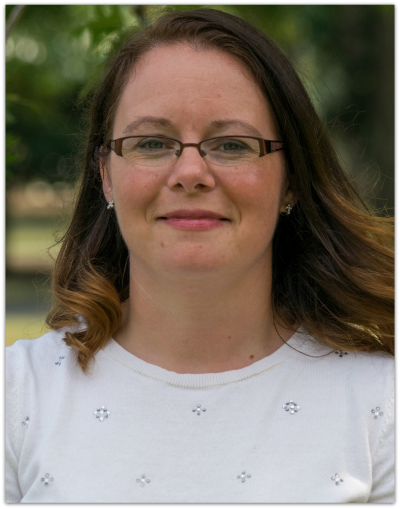
Alice SuroviecAlice Suroviec is an associate professor at Berry College, where she focuses her research efforts on the development of microelectrodes and applications of electrochemistry to real-time detection of biological analytes in aqueous solutions. Suroviec has recently been appointed to the ECS Electrochemical Science & Technology Editorial Board as an associate editor for the Journal of The Electrochemical Society (JES).
The Electrochemical Society: What do you hope to accomplish in your role as associate editor?

Alice Suroviec: I hope to make a stronger connection between the excellent work being presented at ECS meetings and JES. I would like to see that JES becomes a go-to journal for publishing the best work in our field. That we will be able to provide excellent peer-reviews in a timely manner and that the process is successful for both the authors and the reviewers.

ECS: How important is the peer review process in scholarly publications?

AS: The peer review process is critical to the process of disseminating scientific work. The sciences are by nature a team process. In the lab we work with other team members to produce novel research. The peer review process is an extension of that, where other experts in the author’s area weigh in to produce the best paper possible. Peer review in JES also provides a quality control so the readers of the journal know that they are reading reputable results.

(more…)

By: Jeff Inglis, The Conversation

Editor’s note: The following is a roundup of archival stories.

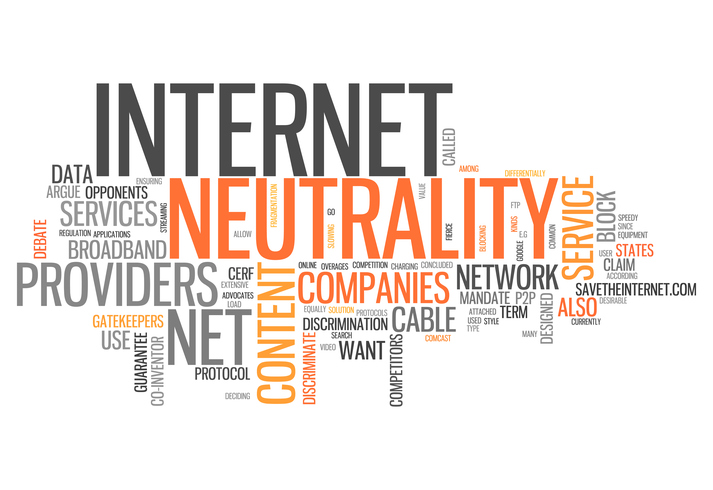
Net neutralityWith the selection of Ajit Pai to chair the Federal Communications Commission, President Trump has elevated a major foe of net neutrality from the minority on the commission to its head. Pai, already a commissioner and therefore needing no Senate approval to become its chair, would need to be reconfirmed by the end of 2017 to continue to serve.

But what is net neutrality, this policy Pai has spent years criticizing? Here are some highlights of The Conversation’s coverage of the controversy around the concept of keeping the internet open:

Public interest versus private profit

The basic conflict is a result of the history of the internet, and the telecommunications industry more generally, writes internet law scholar Allen Hammond at Santa Clara University:

Like the telephone, broadcast and cable predecessors from which they evolved, the wire and mobile broadband networks that carry internet traffic travel over public property. The spectrum and land over which these broadband networks travel are known as rights of way. Congress allowed each network technology to be privately owned. However, the explicit arrangement has been that private owner access to the publicly owned spectrum and rights of way necessary to exploit the technology is exchanged for public access and speech rights.

The government is trying to balance competing interests in how the benefits of those network services. Should people have unfiltered access to any and all data services, or should some internet providers be allowed to charge a premium to let companies reach audiences more widely and more quickly?

(more…)

Editors' Choice

An Editors’ Choice article is a special designation applied by the Journals’ Editorial Board to any article type. Editors’ Choice articles are transformative and represent a substantial advance or discovery, either experimental or theoretical. The work must show a new direction, a new concept, a new way of doing something, a new interpretation, or a new field, and not merely preliminary data.

Two Editors’ Choice articles were published in the Journal of The Electrochemical Society (JES) in December 2016.

(more…)

Editors' ChoiceThree new Editors’ Choice articles have been published recently in the Journal of The Electrochemical Society (JES) and ECS Journal of Solid State Science and Technology (JSS).

An Editors’ Choice article is a special designation applied by the Journals’ Editorial Board to any article type. Editors’ Choice articles are transformative and represent a substantial advance or discovery, either experimental or theoretical. The work must show a new direction, a new concept, a new way of doing something, a new interpretation, or a new field, and not merely preliminary data.

(more…)

ImmigrationNobel laureates are speaking out on immigration policies, highlight their own status as immigrants and the importance of open boarders to advance science. Of the year’s Nobel Prize winners, six affiliated with U.S. universities are immigrants.

Across the globe, many countries have been discussing and legislating new immigration policies that make it more difficult to travel from place to place. These immigration conversations have led to moves such as the UK’s Brexit, Hungary’s attempts to keep “outsiders” from crossing its boarder, and U.S. presidential nominee Donald Trump’s plan to build a wall on the U.S./Mexico border.

Research conducted in late 2015 revealed that as immigration policies harden globally, scientists in the developing world are caught in the crosshairs, causing innovation and research to suffer.

“I think the resounding message that should go out all around the world is that science is global,” James Fraser Stoddart, a winner of the Nobel Prize in Chemistry and a professor at Northwestern University, who was born in Scotland, told The Hill. “It’s particularly pertinent to have these discussions in view of the political climate on both sides of the pond at the moment…. I think the United States is what it is today largely because of open borders.”

(more…)

ECS shows its vision for the future of academic publishing

Open AccessECS is celebrating Open Access Week this year by giving the world a preview of what complete open access will look like. From October 24th through October 30th, we are taking down the paywall to the ECS Digital Library, making over 132,000 scientific articles and abstracts free and accessible to anyone.
Eliminating the paywall during Open Access Week is a preview of ECS’s Free the Science initiative; a business-model changing plan with the goal of making the entire ECS Digital Library open access by 2024. ECS believes that the opening and democratizing of this information will lead to rapid advances in discoveries ranging from renewable energy to clean water and sanitation.

“ECS has one core goal: to disseminate this scientific research to the broadest possible audience without barriers,” says Mary Yess, ECS Deputy Executive Director and Chief Content Officer. “The research of our authors has the ability to address some of the most critical issues across the globe, and we believe paywalls should not impede progress.”

(more…)

Open Access Week is fast upon us, and this year’s theme is “Open in Action.” ECS’s participation in Open Access Week is a preview of our vision to Free the Science, a future where authors can publish with us for free and readers can access our Digital Library without paywalls (find out more about what we’re doing to celebrate).

In the spirit of this year’s theme, ECS has created a list  of “action items” to help you make the most of the week:

(more…)

Celebrating Open Access Week

Open AccessThe last week of October is International Open Access Week. As ECS did last year, we are celebrating by giving the world a preview of what complete open access will look like when we have completed our Free the Science campaign. From October 24th through October 30th we are taking down the paywall to the ECS Digital Library. Over 132,000 articles will be freely available to anyone who wants to read them.
We had great success with this last year. During Open Access Week the Journal of The Electrochemical Society saw a 51% increase in usage.

Please spread the word. From October 24th through the 30th anyone will be able to read any of the content in our digital library for free.  We hope to make this the “norm” in the future through our Free the Science initiative.

Posted in Open Access

Special Offer for Open Access

Open AccessAt ECS, we offer your institution a subscription to ECS Plus, which gives your researchers access to a wealth of high-ranking, highly-cited research in electrochemistry and solid state science.

With ECS Plus, authors can publish an unlimited number of articles in our high-ranking journals (Journal of The Electrochemical Society and ECS Journal of Solid State Science and Technology) as Open Access, at no additional cost to them or your institution.

Please don’t hesitate to email Anna Olsen, Senior Content Associate and Library Liaison, with any questions you may have, or with your order!

ECS
Privacy Overview

This website uses cookies so that we can provide you with the best user experience possible. Cookie information is stored in your browser and performs functions such as recognising you when you return to our website and helping our team to understand which sections of the website you find most interesting and useful.